Project Introduction
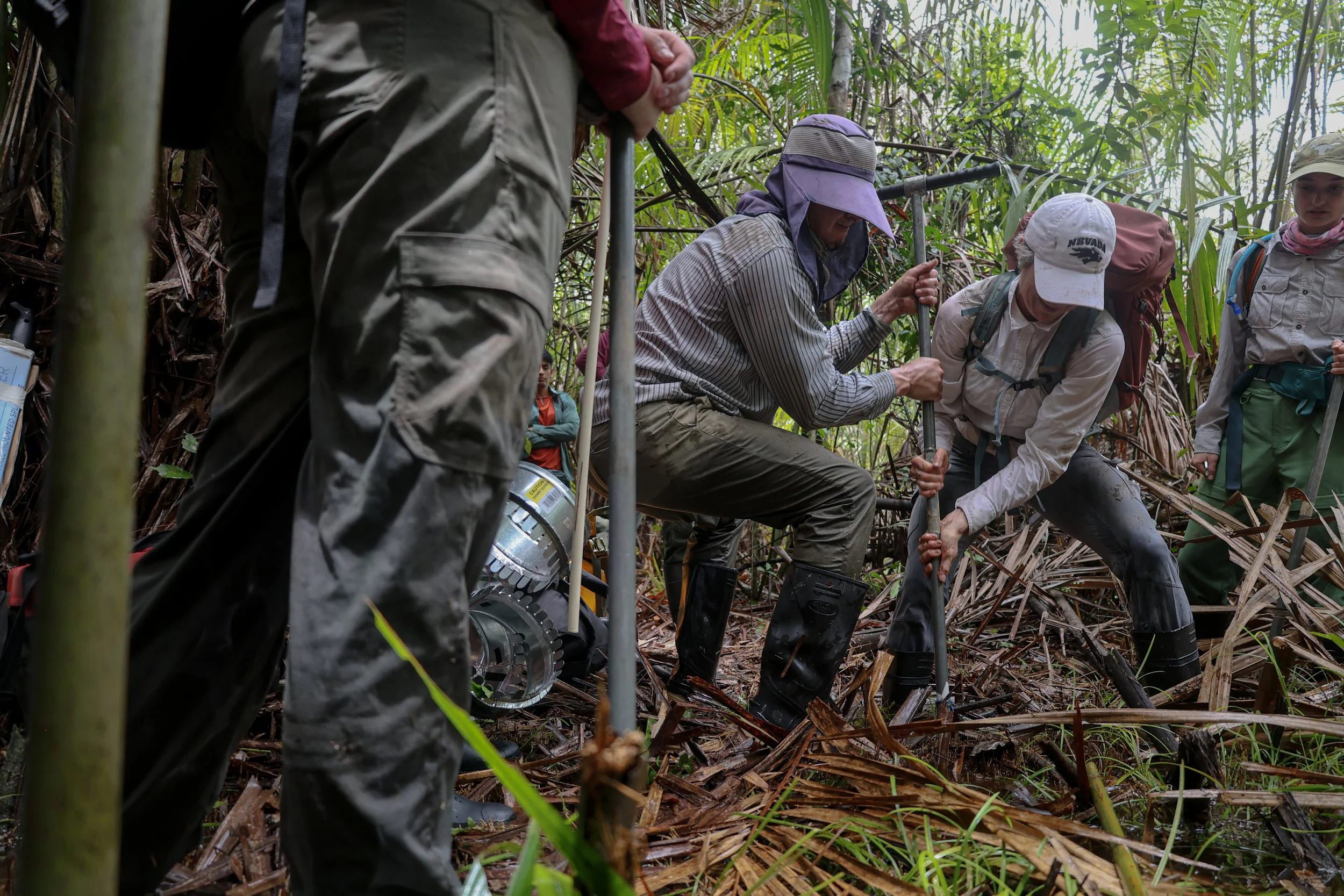
The PanAm Peatland Project is a field-based research initiative designed to standardize field measurements across peatlands of Central and South America. At the project core is a standardized sampling toolkit that allows scientists and field teams to collect samples in a systematic and repeatable manner, which allows to compare and contrast datasets across the region.
This page serves as a practical resource for using the toolkit in the field. Here we bring together short field guides, instructional videos, and data templates to support clear, consistent data collection.
PDF Field Guides (Download & Print)
— under construction —
These field method guides provide standardized, step-by-step instructions for collecting peatland data across core toolkit methods, from soil and water sampling to vegetation and decomposition measurements. Designed as concise front-and-back references, they support consistent, repeatable data collection in the field across sites and teams.
Video Demonstrations
These instructional videos walk the viewer through each field method in real time, demonstrating how the toolkit is used in the field. It is recommended to review those demonstrations prior to fieldwork, as they complement the written guides and help ensure consistency and clarity during data collection.
Blank Data Spreadsheets
— under construction —
These Microsoft Excel templates provide a standardized format for recording field data across all toolkit methods. They are designed to be used during or immediately after sampling to ensure consistent, organized, and complete data entry.
peat core data
tree diameter data
tree diameter data
litterbag installation & retrieval data
soil sampling with auger data
porewater data
Learn More About Our PanAm Peatland Project & Sampling Toolkits
— under construction —
Overall Goal of the Project
Tropical peatlands are believed to play an outsized role in the global carbon cycle. Despite their relatively small extent, these ecosystems act as some of the strongest long-term terrestrial carbon sinks on Earth. They are also believed to constitute some of the world’s largest natural methane sources. However, these claims are anchored in very little field data. Key knowledge gaps and disagreements are related to: (1) poorly constrained peatland area, (2) sparse data on peat-soil properties, including depth, density, and carbon content, as well as peat-forming processes that include tree decay and burial, (3) scarce data on peatland-carbon exchanges with the atmosphere, and (4) deficient mechanistic understanding of peat formation.
These knowledge gaps are problematic because tropical peatland ecosystems are under severe threat from climate- and human-driven changes. For instance, tropical peatlands are being lost at a rate about three times faster than forests. In southeast Asia, where over 90% of peatlands have been altered by human activities, intensified peat decomposition and peat fires contribute large amounts of CO2 to the atmosphere. Models need to account for peatland degradation in their models, and also how peatland destruction compounds with climate change. In 2015, during an “El Niño” year, peat fires in Indonesia were labeled “a crime against humanity” due to the pollution they caused, with daily emissions from these fires exceeding daily average emission from the whole of the US. These emissions produced a large peak in CO2 emissions in the global carbon budget. The peatlands of the PanAm region are under threat from land-use and climate changes, and it is critical to learn from the consequences that have come from southeast Asia.
The PanAm project develops and deploys a ‘field sampling kit’ for systematic data collection and analysis across the Pan-American tropical region. The main objective is to deliver both a step change in our understanding of tropical peatland carbon cycling and also train a new generation of local tropical scientists, leaders, and local participants equipped with the skills needed to solve those science and policy issues.
Why the Pan-American Tropical Region is Critical to Study
The lowland tropical peatlands of the Pan-American region may hold some of the world’s largest and most diverse ecosystems. These lowland peatlands also store vast amounts of carbon and regulate regional water flows. But as these ecosystems remain largely unchartered, we do not possess the knowledge needed to understand their vulnerability to current and future agents of change, nor can we predict their trajectory under changing environmental conditions. By systematically documenting these ecosystems now, this project allows for the collection of much-needed baseline information on PanAm peatlands by providing bottom-up, repeatable datasets that will yield actionable information for land management, including conservation. The data acquired through this project will also be used to benchmark, test, and validate land surface models, which is needed to integrate peatlands into Earth System Models.
Where the Peat Toolkits Are Being Sent
Field sampling kits are being distributed across Central and South America. These kits enable local scientists and their students to gather consistent data on water, gas, soil, and microbes, fostering collaboration and data collection across the Pan-American tropical peatland biome.
Direct data collection via toolkits:
Peat depth and composition
Greenhouse gas emissions
Water table depth and soil moisture
Nutrient and sediment input
Porewater chemistry
Isotope ratios of carbon and water
Microbial communities
What is Peat, and Why is it Important for Climate Science?
Peat is a type of organic-rich soil made up of partially decayed vegetation, which accumulates in waterlogged conditions. It is one of Earth’s most effective natural carbon stores. Although tropical peatlands cover a small fraction of land, they store a significant amount of the planet’s carbon and release methane, a potent greenhouse gas. Understanding peatlands’ carbon and methane dynamics is essential to predict and mitigate climate change.